Alkatide Ingredients: What's Inside & Why
Quick Answer: What Are the Ingredients in Alkatide?
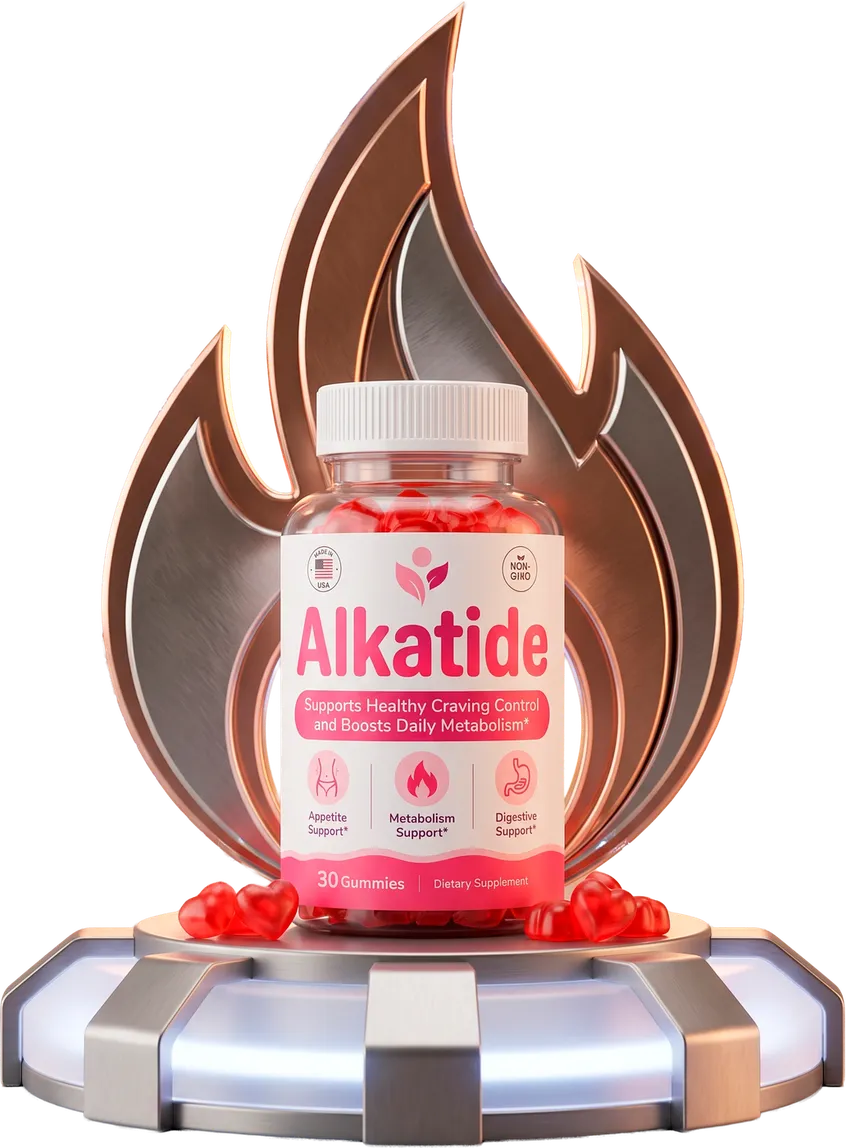
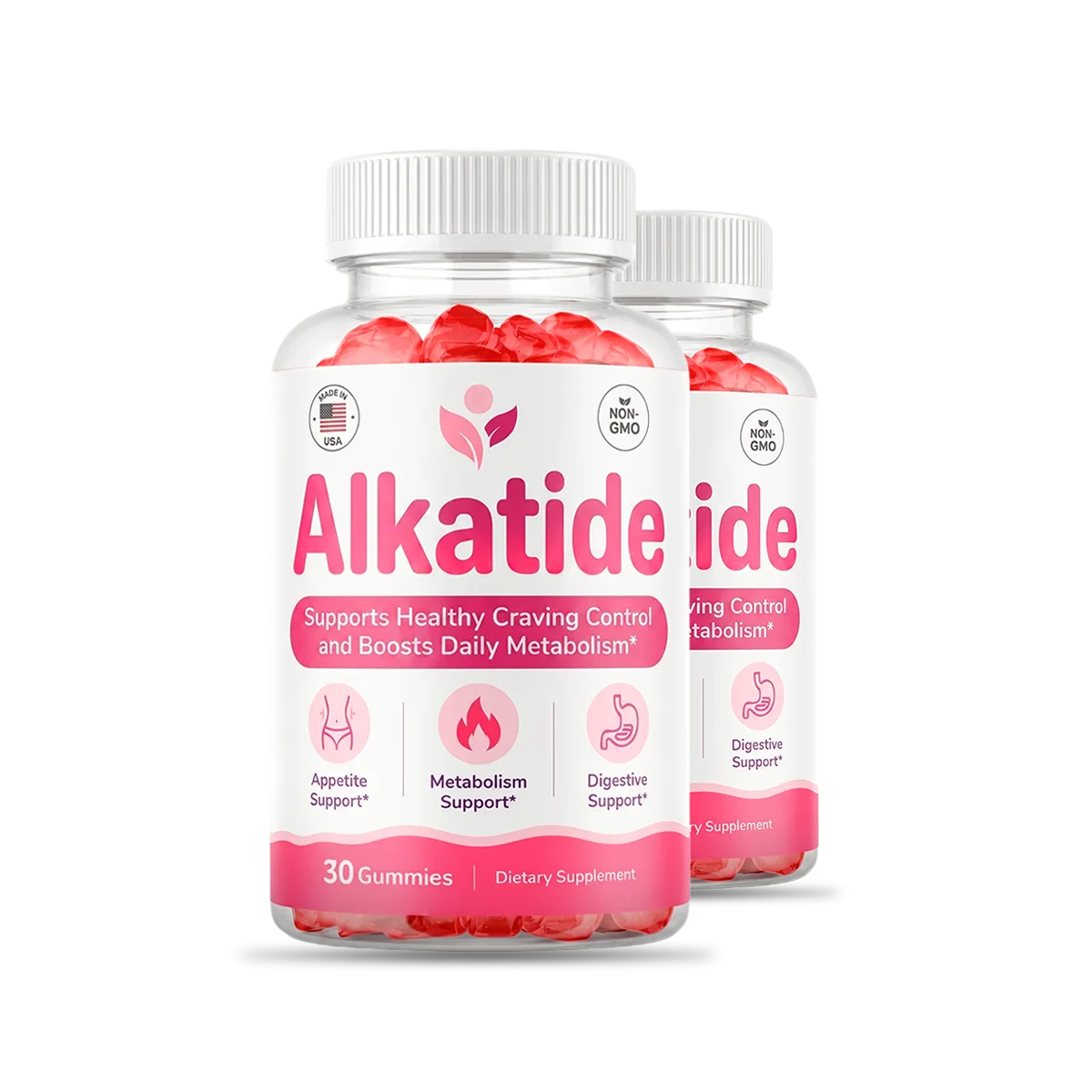
Alkatide ingredients come down to three named items: apple cider vinegar, pectin and citric acid. The vinegar supplies acetic acid, pectin adds soluble fibre and gels the gummy, and citric acid handles tartness. There is no caffeine, berberine or probiotic strain, and crucially the label publishes no dose for any of them.
- The acetic acid engine: apple cider vinegar, studied for gastric emptying and post-meal glucose.
- The fibre: pectin, a soluble fibre that adds fullness and turns the mix into a gummy.
- The catch: all three ingredients are named, but not one milligram figure is published.

Before any supplement earns a place in your routine, it should be able to answer one blunt question: what exactly is in it, and why is each thing there? With most metabolism gummies that turns into a scavenger hunt across a proprietary blend, a wall of Latin names, and a "supports" claim doing an enormous amount of work. So here is the good news up front on the Alkatide ingredients list: it is short, it is in plain English, and there is nothing hiding behind a trademarked blend name. The less good news is the number that should sit next to each ingredient. There isn't one.
This is a mid-funnel article, which is a fancy way of saying you are probably close to deciding and you want the last objection cleared before you spend money. We are an independent publisher, not the manufacturer, so we can be plain: two of the three ingredients have a genuine, if modest, evidence trail, one is essentially there for taste and shelf life, and the biggest weakness of the label is not what it contains but what it refuses to quantify. Let's walk it ingredient by ingredient.
What's actually in Alkatide: the three named ingredients
The label names three ingredients and no others: apple cider vinegar, pectin and citric acid. That is the entire cast. There is no green tea extract, no chromium, no Garcinia, no B-vitamin premix, and no probiotic strain. Whether you read that as refreshing simplicity or as a thin formula depends on what you were hoping to buy, and we will come back to that argument, because it is the objection most people raise.
Simplicity has a real virtue that gets underrated. A three-ingredient gummy is easy to reason about. You are not paying for a dozen "pixie-dusted" botanicals present at doses too small to do anything but pad the label. And crucially, none of the three named items is a stimulant, so this is not the kind of fat-burner that borrows its "energy" from a caffeine jolt. What you get is what it says: a once-daily apple cider vinegar gummy carried on a fibre base and made palatable with a food acid.
The catch, which the manufacturer's own marketing quietly steps around, is that it discloses which ingredients are present without disclosing how much of any of them. There is no serving-size table, no milligrams of vinegar, no grams of pectin. For a product whose headline ingredient is studied at tablespoon-sized doses, that gap matters, and we will not pretend otherwise. Hold that thought; it is the single most important thing to understand about this formula.
Apple cider vinegar: the acetic acid engine
Apple cider vinegar is the reason this product exists, and its active component is acetic acid. This is where the actual science lives. In small human trials, acetic acid taken with a starchy meal has been linked to two measurable effects. First, it slows gastric emptying, meaning food leaves the stomach more gradually, so the stretch signals that tell your brain you are full linger for longer. Second, it blunts the sharp spike and subsequent crash in blood glucose that a refined-carbohydrate meal produces, and that crash is a common trigger for hunger returning early. Put together, the plausible everyday effect is modest appetite control around meals rather than any kind of dramatic fat incineration.
Note the language: modest, plausible, around meals. The trials that made apple cider vinegar famous were small, short, and had participants swallow liquid vinegar, often a tablespoon or two in water before eating. That is an important detail because it sets the dose against which any gummy has to be measured. If a serving of gummies delivers a fraction of that acetic acid, you should expect a fraction of the effect, or none that you can feel. A gummy format genuinely solves one real problem, though: neat vinegar is acidic enough that dentists warn about enamel erosion, and a chewable removes that mouthful of acid. It trades one inconvenience for a new uncertainty about dose.
People often ask whether the vinegar's famous "mother" survives into a gummy, and it is a fair question about what you are actually getting. If that is on your mind, we took it apart separately in our look at whether the ACV mother survives the gummy manufacturing process, because the answer changes how you read the word "raw" on any label in this aisle.
Pectin: the fibre that also builds the gummy
Pectin is doing two jobs at once, which is why it is easy to overlook. Chemically it is the gelling agent that makes a pectin gummy set into a gummy at all, the same fibre used to thicken jam. That is not a filler; it is structural. But pectin is also a genuine soluble fibre, and soluble fibre is one of the better-evidenced levers for fullness. It absorbs water, forms a viscous gel in the gut, and slows gastric emptying, layering onto the same mechanism the acetic acid is aiming at from a different angle.
Here the dose problem bites again, harder. Soluble fibre earns its reputation for satiety and stool regularity at doses measured in grams per day, typically three to ten. The amount of pectin needed to gel a single small gummy is a fraction of that. So while pectin is a real fibre with real evidence behind it, the amount realistically present in one gummy is almost certainly well below the threshold that fibre studies used. It is honest to call pectin a functional ingredient and dishonest to imply one gummy is a meaningful fibre supplement. Both things are true at once.
Citric acid: flavour, freshness, and the "alkaline" myth
Citric acid is the third name on the list, and it is the one to keep your expectations lowest for. In a food or supplement, citric acid is a flavouring and a preservative. It provides the tart bite you taste, and it helps protect the product from spoilage. That is its job, and it does it well. What it is not is a metabolism ingredient, a fat-burner, or an "alkalizing" agent.
That last point deserves a moment because the product name invites the confusion. A name like AlkaTide, sitting next to an ingredient literally called an acid, nudges people toward the popular "alkaline diet" idea that foods can shift your body's pH and that a more alkaline body burns fat faster. Your blood pH is tightly regulated by your kidneys and lungs within a razor-thin range, and no food or gummy meaningfully moves it. Citric acid in particular is, well, an acid. It is in the formula for taste and stability, full stop. We unpacked this specific claim in more depth in our piece on what citric acid really does in a gummy and why the alkaline branding does not hold up. Treat any "alkalize your body to lose weight" language as marketing atmosphere, not chemistry.
Seen enough of the label?
If a short, plainly named apple cider vinegar gummy is what you were shopping for, the current bundle options, shipping terms and refund window are published on the official store page rather than on any marketplace reseller.
Check the Official Alkatide StoreWhat Alkatide does NOT contain (and why buyers keep asking)
A lot of the questions we get about Alkatide are really questions about what is missing, because the metabolism aisle has trained shoppers to expect a stack of trendy add-ins. It is worth naming the three most commonly asked-about ingredients, saying plainly that Alkatide contains none of them, and explaining what each one actually does so you can decide whether their absence is a dealbreaker.
Spore-forming probiotics. Many gut-and-metabolism products now feature spore-forming Bacillus strains, prized because their tough spore coat lets them survive stomach acid that kills more fragile probiotics on the way down. Alkatide has no probiotic on its label. If a living-strain gut product is what you actually want, that is a different category of purchase, and we explained the mechanism and the label-reading traps in our guide to how spore-forming Bacillus probiotics survive stomach acid to reach the gut. A vinegar gummy is not a probiotic, and it would be a stretch to sell it as one.
Berberine. Berberine is the plant alkaloid that has been all over social media as "nature's Ozempic," studied for its effects on the AMPK energy-sensing pathway and on blood sugar. It is a legitimately interesting compound with real, though early, human data. It is also not in Alkatide. If you specifically came looking for berberine, this is not the product delivering it, and we would rather tell you that than let you assume.
Artichoke leaf extract. Artichoke leaf is a bitter herb popular in digestive formulas because it is choleretic, meaning it prompts the liver to secrete more bile to help emulsify dietary fat. Alkatide contains no artichoke leaf either. If bile flow and rich-meal comfort are your concern, we covered the evidence and the limits in our explainer on what artichoke leaf extract really does to bile flow. The point of listing these is not to pad the article; it is to be straight about the boundaries of a simple, three-ingredient gummy so nobody buys it expecting a kitchen-sink formula.
Named ingredients versus a hidden proprietary blend
Now for the objection that matters most, because it cuts both ways. On one hand, Alkatide does something a lot of its competitors do not: it names every ingredient in plain language. There is no "Metabolic Support Complex 500 mg" concealing a dozen items in unknown proportions. A proprietary blend is legal, but it exists mainly to stop you from seeing how little of the expensive ingredient you are paying for. Full ingredient disclosure is, genuinely, a mark in Alkatide's favour, and it is the honest reason a transparency-minded buyer might prefer it over a flashier label.
On the other hand, disclosure of names without disclosure of amounts is only half the transparency the word implies. We say this on our homepage and we will say it here: there is no published milligram figure for the apple cider vinegar, no gram figure for the pectin, and no serving-size table for the citric acid. Naming ingredients tells you the recipe; publishing doses tells you whether the recipe can do anything. Alkatide gives you the first and withholds the second. That is better than a proprietary blend, which hides both, but it is not the gold standard, which is a full, quantified Supplement Facts panel you can compare against the studies.
The useful buying rule is simple. A named-but-unquantified ingredient beats a hidden blend, and a fully quantified panel beats them both. Alkatide sits in the middle: honest about the "what," silent on the "how much."
Where does that leave a real decision? For a lot of shoppers, an appealing flavour, a stimulant-free formula, a clean three-item list and a solid money-back guarantee is enough, especially at a bundle price. For a shopper who wants to verify the acetic acid dose against the vinegar trials, the missing numbers will be a genuine sticking point, and no amount of marketing changes that. Both readers are being rational. If you want to see how that trade-off plays out in customer experience, we weighed it in our honest look at whether Alkatide reviews actually hold up.
The Alkatide ingredients at a glance
Here is the whole formula in one table, with each ingredient's real job and the honest strength of the evidence behind it. Notice that the "amount" column is the same for all three, and that is the point.
| Ingredient | What it really is | Proposed role | Disclosed amount | Strength of evidence |
|---|---|---|---|---|
| Apple cider vinegar | Fermented apple juice; source of acetic acid | Slows gastric emptying, softens post-meal glucose rise, modest appetite control | Not disclosed | Real but modest human data; studied at tablespoon liquid doses |
| Pectin | Soluble fibre; also the gelling agent | Adds fullness and viscosity; structurally makes the gummy set | Not disclosed | Good evidence for fibre at gram doses; likely well below that here |
| Citric acid | Common food acid | Tartness and preservation; not a metabolism ingredient | Not disclosed | No weight or metabolism role; flavour and stability only |
The value of laying it out this way is that it stops the marketing halo from spreading across all three ingredients equally. Apple cider vinegar carries the mechanism; pectin supports it and builds the product; citric acid is there for the taste bud. Reading the label this literally is the fastest route to expectations that will not disappoint you.
Side effects and who should be cautious
A short, stimulant-free formula is generally easy to tolerate, but "generally" is not "everyone," and the acids are the thing to watch. Apple cider vinegar and citric acid are both acidic, and even in a gummy that acidity can irritate tooth enamel over time or bother a sensitive stomach, so rinsing with water and not sucking on the gummy helps. Added fibre, even a small amount, can cause temporary gas or bloating while your gut adjusts. None of this is exotic; it is the ordinary profile of vinegar and fibre.
The interactions worth knowing are also vinegar's. Acetic acid can affect blood sugar, so if you take diabetes medication it is a conversation to have with your prescriber rather than a guess to make alone. Vinegar has also been flagged for potential interactions with diuretics and potassium-lowering drugs. If you are pregnant, nursing, managing a diagnosed condition, or taking prescription medicine, clear it with a qualified clinician first. That is not boilerplate; it is the specific caution these particular ingredients earn.
Medical note: general information only, not medical advice. A dietary supplement is not a treatment for obesity or any disease. Speak to a qualified healthcare professional before starting any supplement, particularly if you are pregnant or nursing, managing diabetes, taking prescription medication, or living with a diagnosed condition.
So, is the Alkatide ingredients list worth buying?
Strip away the branding and the answer is refreshingly concrete. Alkatide is a once-daily apple cider vinegar gummy carried on a pectin fibre base and finished with citric acid for taste. Two of those three have a plausible, well-described mechanism for gentle appetite control around meals; the third is there for flavour. There is no stimulant, no proprietary blend hiding the recipe, and no probiotic, berberine or artichoke leaf despite what the crowded metabolism aisle might have led you to expect. The one real weakness is the missing dose on every line, and that is a fair reason for a numbers-driven buyer to hesitate.
If a clean, plainly labelled, stimulant-free vinegar gummy at a bundle price is the thing you were actually shopping for, the ingredients do what the format promises. If you were expecting a loaded metabolic stack, this is not that, and knowing so before you order is exactly the point of reading the label first. When you are ready to compare the current bundles and the guarantee, go straight to the official store rather than a third-party listing.
Related reading
Frequently asked questions
What are the main ingredients in Alkatide?
Alkatide names three ingredients and no others: apple cider vinegar, pectin and citric acid. Apple cider vinegar supplies the acetic acid the product is built around, pectin is a soluble fibre that also gels the gummy, and citric acid handles tartness and freshness. There is no caffeine, no berberine and no probiotic strain on the label.
Are Alkatide ingredients backed by science?
Partly. Acetic acid from vinegar has real, if modest, human evidence for slowing gastric emptying and softening the post-meal glucose rise, and soluble fibre like pectin has a solid record for fullness at gram doses. Citric acid, though, is a flavour and freshness agent, not a fat-burner. The honest catch is that Alkatide publishes no amount for any of the three, so nobody can confirm the studied doses are present.
Does Alkatide contain stimulants or caffeine?
No. Alkatide lists only apple cider vinegar, pectin and citric acid, and none of those is a stimulant. There is no caffeine, green tea extract, synephrine or other energy compound in the formula, which is why it will not give you the jittery lift some thermogenic fat-burners aim for. It is a once-daily gummy, not a pre-workout.
Are there any Alkatide side effects to know about?
For most healthy adults the ingredients are well tolerated, but the acids can be an issue. Apple cider vinegar and citric acid are acidic and can bother tooth enamel or a sensitive stomach, and added fibre can cause temporary gas or bloating as your gut adjusts. Vinegar may also interact with diabetes medication, diuretics and potassium-lowering drugs, so check with a clinician if that applies to you.
Scientific references
Read the label first, then the offer
That is the order we apply to everything we cover. If the three-ingredient Alkatide gummy is on your shortlist, the current bundle options, shipping terms and refund window are published on the official store page.
Go to the Official Store