Gut Health Supplement Probiotic: How Spore-Forming Bacillus Survives
Quick Answer: What Makes a Spore-Forming Probiotic Different?
Spore-forming Bacillus strains survive the journey to your intestine because they travel as endospores — dormant, dehydrated cells wrapped in a tough protein coat that shrugs off heat, dry air and stomach acid. That is why a gut health supplement probiotic built on Bacillus can sit on a warm shelf in a tablet or a chew instead of living in a refrigerated capsule. Survival, though, is a delivery problem solved, not a health benefit proven: the spores germinate, act briefly in the small intestine, and are cleared within days of the last dose.
- The advantage: shelf stability and acid resistance, without an enteric coating.
- The limit: spore-formers are transient visitors, not permanent colonists of the gut.
- What to check: the full strain code, the CFU count at expiry rather than at manufacture, and whether that exact strain has been studied in people.

What a bacterial spore actually is
Most bacteria are fragile. Take a live Lactobacillus out of a chilled capsule, warm it up, dry it out and then wash it in stomach acid at pH 2, and a large share of the population does not make it to the small intestine. Manufacturers spend real money working around that problem with freeze-drying, protective matrices, enteric coatings and cold-chain shipping.
A handful of genera solved it themselves, hundreds of millions of years ago. When conditions turn hostile, species in the Bacillus genus — and their relatives in Clostridium — build an endospore: they replicate their DNA, wall a copy off inside a thick cortex and a keratin-like coat, pump the water out and shut down metabolism almost entirely. What is left is not a resting cell so much as a sealed archive of one. Endospores tolerate boiling, drying, ultraviolet light and years of storage. This is the same biology that makes spore-forming bacteria a headache in food safety, repurposed as a delivery system.
Swallow one and it passes the stomach essentially untouched. Bile salts and the change in pH and nutrients in the upper small intestine trigger germination, the spore rehydrates, and a normal growing cell steps out. From that point it behaves like any other transient microbe: it metabolises, it secretes enzymes and small molecules, it interacts with the gut lining and the resident community, and then it is swept downstream and out.
Spore-formers versus the strains in a refrigerated capsule
It helps to stop thinking of "probiotics" as one product category. There are at least three unrelated technologies on the shelf, and they are not competing to do the same job.
The classic lactic acid bacteria — Lactobacillus, now split across several genera, and Bifidobacterium — are the ones with the deepest research base, largely because they have been studied in fermented dairy for decades. They are also the fragile ones. Saccharomyces boulardii is not a bacterium at all but a yeast, which makes it indifferent to antibiotics. And the spore-formers, mostly Bacillus subtilis and Bacillus coagulans, trade a thinner evidence base for ruggedness.
One quirk of the labelling is worth knowing. Bacillus coagulans spent years on ingredient lists as "Lactobacillus sporogenes", a name that never made taxonomic sense — there is no spore-forming Lactobacillus. If you see that phrase on a bottle today, you are looking at either very old stock or a supplier working from a very old spec sheet.
| Format | Typical daily amount on labels | Needs refrigeration? | Strength of human evidence |
|---|---|---|---|
| Spore-forming Bacillus (subtilis, coagulans) | 1–6 billion CFU | No | Growing but thin; concentrated on a few branded strains, several trials funded by the strain owner |
| Lactobacillus / Bifidobacterium blends | 10–50 billion CFU | Usually, or an enteric coating | The largest body of trials in the category, though results are strain-specific and inconsistent |
| Saccharomyces boulardii (yeast) | 250–500 mg | No | Best studied of the three for antibiotic-associated digestive upset |
| Prebiotic fibre (inulin, pectin, GOS) | 3–10 g | No | Consistent for stool regularity at gram doses; nothing at milligram doses |
That last row is the one most shopping guides skip. If you rank the whole shelf by how reliably it changes something measurable, plain soluble fibre at gram doses does better than most capsules — and it is the cheapest thing in the aisle. Any honest attempt to name the best gut health supplement has to start there rather than with a CFU number.
Looking at gummies rather than capsules?
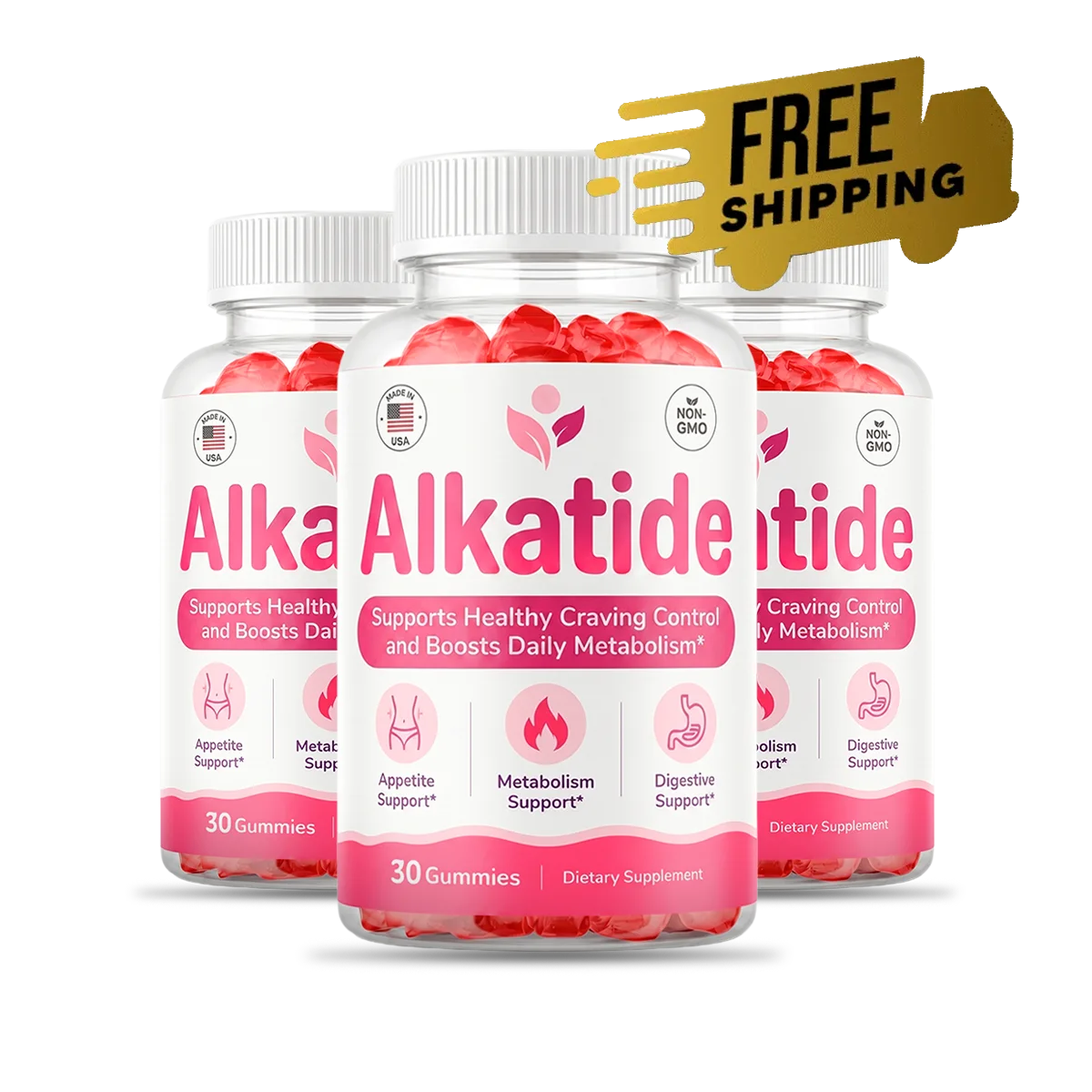
AlkaTide is an apple-cider-vinegar gummy, not a probiotic. If that is the shelf you are actually shopping, the official store is where the current bundles and shipping terms live — useful if you have been searching where to buy apple cider vinegar gummies without landing on a marketplace reseller.
Check the Official AlkaTide StoreWhat the evidence shows, and how strong it is
Here is the honest position. Spore-forming strains have a real and growing trial literature covering digestive comfort, bloating, stool consistency and some immune markers, and a few branded strains carry several randomised, placebo-controlled studies each. But the trials are typically small, run for a few weeks, and frequently funded by the company that owns the strain. Independent replication is the scarce commodity in this field, not published papers.
The single most important idea, and the one the NIH's own consumer material keeps repeating, is that probiotic effects are strain-specific. Evidence for Bacillus subtilis DE111 is evidence about DE111. It is not evidence about Bacillus subtilis in general, and it is certainly not evidence about a blend that lists species names with no code numbers at all. Species-level labelling is the single clearest sign that a product is borrowing credibility from research it was never part of.
A probiotic label that names the species but not the strain is like a citation that names the journal but not the paper. It tells you where to look and nothing about what was found.
There is also a plausibility argument that gets overstated. Because Bacillus species are found in soil and in fermented foods, they are sometimes sold as the ancestral microbes modern hygiene stripped out of us. That story is not evidence. Soil origin says nothing about whether a strain does anything useful once swallowed, and the same reasoning would make a great many soil organisms look like supplements.
Choosing a gut health supplement probiotic: what the label has to tell you
When people search for a gut health supplement probiotic they usually compare the biggest number on the front of the box. That number is the least informative thing there. Four other details do more work.
The full strain designation. A genus, a species and a code — Bacillus subtilis DE111, Bacillus coagulans GBI-30 6086. No code, no traceable research.
CFU guaranteed through the expiry date. Colony-forming units measured at the time of manufacture flatter the label, because live counts fall during storage. Spore products have a genuine edge here and the good ones say so explicitly.
Whether the dose matches the studied dose. A strain trialled at two billion CFU tells you nothing about the same strain at 200 million, and manufacturers do sometimes use a studied name at an unstudied amount.
What else is in the serving. In gummies and chews especially, the carrier matters — sugars, gelling agents and coatings make up most of the mass. We walk through that arithmetic in our piece on what survives gummy manufacturing, and the same logic applies to any live organism asked to ride along in a cooked confection.
Anyone comparing the best gut health probiotic supplement options across a dozen tabs will notice that these four lines are missing from most of them. That absence is information.

What a spore probiotic cannot do
This section matters more than the rest of the article, so it is deliberately blunt.
A spore probiotic does not permanently repopulate your microbiome. The adult gut community is largely established, dominated by strict anaerobes that no shelf-stable capsule delivers, and it is shaped far more by long-run diet, medication history and genetics than by a daily dose of anything. Studies that track spore strains after supplementation stops generally find them gone within days to a couple of weeks. Whatever you get, you get for as long as you keep taking it.
It does not treat, cure or prevent any disease. Digestive symptoms that persist, change pattern, or come with weight loss, bleeding, fever or night pain are a reason to see a clinician, not a reason to change supplement brands. Coeliac disease, inflammatory bowel disease, bile acid malabsorption and small intestinal bacterial overgrowth all present as "bloating" and none of them is a probiotic question.
It is not automatically harmless, either. Healthy adults typically report nothing worse than a few days of extra gas. But live micro-organisms have been linked, rarely, to bloodstream infections in people who are immunocompromised, critically ill, fitted with a central venous catheter, or recovering from major abdominal surgery. Those groups should ask a clinician before starting.
And it does not cause weight loss. There is early research on the microbiome and body weight, and it is genuinely interesting, but it does not yet support the claim that swallowing a spore strain changes what the scale says. Any product marketed on that promise is well ahead of its evidence.
Medical note: general information only, not medical advice. Speak to a qualified healthcare professional before starting any supplement — particularly if you are pregnant or nursing, immunocompromised, taking prescription medication, or living with a diagnosed digestive condition.
Where AlkaTide fits, and where it does not
We should be direct about this, because it is the sort of thing an affiliate site normally blurs. AlkaTide is an apple-cider-vinegar gummy with three named ingredients: apple cider vinegar, citric acid and pectin. It contains no Bacillus, no Lactobacillus, and no probiotic of any kind. If a spore-forming probiotic is specifically what you came for, this is not that product and no amount of category overlap changes it.
What it does carry is pectin, a soluble fibre from apple and citrus peel — which is a prebiotic in the technical sense, in that colonic bacteria ferment it. The honest caveat is the same arithmetic problem that runs through this whole category: fibre trials that report meaningful effects use grams per day, and a gummy's gelling system is a fraction of a gram. The manufacturer publishes no Supplement Facts panel and no milligram figure for any of the three ingredients, which we say plainly on the main page rather than filling the gap with guesses. The related question of what those ingredient names are actually doing is covered in our piece on herbal digestive ingredients and bile flow.
Frequently asked questions
Do spore-forming probiotics need to be refrigerated?
No. A bacterial endospore is a dormant, dehydrated survival form with a tough protein coat, so it tolerates warm shelves, humidity and stomach acid far better than a live vegetative cell. That shelf stability is the main practical advantage of the format and it is why spore strains turn up in tablets, powders and chews rather than only in refrigerated capsules.
Do Bacillus probiotics permanently colonise the gut?
Almost certainly not. Current evidence describes spore-formers as transient passengers that germinate in the small intestine, spend a short window active, and are cleared within days or a couple of weeks of the last dose. Any effect they have is an effect you keep paying for daily, not a one-off reseeding of the microbiome.
Is a higher CFU count better in a probiotic?
Not on its own. CFU counts how many viable units are in a serving, not whether that particular strain has ever been tested in people. A spore product with one to a few billion CFU of a strain studied at that amount is more informative than a fifty billion CFU blend of strains with no code numbers listed.
Who should be cautious with probiotic supplements?
People who are immunocompromised, seriously ill in hospital, fitted with a central venous catheter, or recovering from major gut surgery should talk to a clinician first, because live micro-organisms have been linked to rare bloodstream infections in those groups. Healthy adults usually report nothing worse than a few days of gas or bloating.
Scientific references
- NIH NCCIH — Probiotics: what you need to know
- NIH Office of Dietary Supplements — Probiotics fact sheet for health professionals
- Mayo Clinic — Probiotics and prebiotics, common questions
- Harvard T.H. Chan School of Public Health — The microbiome
- PubMed — randomised trials of Bacillus probiotic strains
Reading the label before you buy
We say the same thing about every product we cover: check what is disclosed before you check the offer. If AlkaTide is on your shortlist, the current bundles, shipping terms and refund window are published on the official store page.
Go to the Official Store