Natural Ozempic Alternatives: What Really Works
What Is the Closest Natural Ozempic Alternative That Actually Works?
There is no true natural Ozempic. The honest closest thing is a high-protein, high-fibre diet with soluble fibre and a little vinegar, which nudge your own GLP-1 through short-chain fatty acids. The effect is modest, only shows inside a calorie deficit, and no supplement matches a prescription drug.
- The numbers are lopsided — Wegovy trials show about 14.9% body-weight loss and Zepbound about 21%, while berberine manages only 1-3%.
- Gut bacteria do the work — fermenting fibre into butyrate and acetate can raise your own GLP-1 a little.
- A calorie deficit is non-negotiable — every natural route needs one to show on the scale.

If you have searched for a natural Ozempic in the last year, you are in enormous company, and you have also waded into some of the most exaggerated marketing on the internet. Prescription GLP-1 drugs delivered results that reset expectations for what weight loss could look like, and the moment they became expensive, hard to get and needle-based, a whole industry rushed to bottle the "natural" version. This guide cuts through that noise. It lays out which foods and supplements genuinely nudge your own GLP-1, what the honest numbers are, and where a product like AlkaTide fits without pretending to be something it is not.
The single most useful thing to understand up front is that "GLP-1" is not only the name of a drug. It is a hormone your gut releases every time you eat. So the real question behind every natural Ozempic alternative is not "can a pill copy the drug" — it cannot — but "can what I eat and take encourage my body to make a bit more of its own GLP-1." The answer is a cautious yes, and the size of that yes is what the rest of this article is about.
Why "nature's Ozempic" became the search of the year
The demand did not appear from thin air. Prescription GLP-1 medicines moved from a diabetes niche to a cultural moment, and with that came shortages, high out-of-pocket costs, injection fatigue and a huge group of people who either could not access the drugs or simply did not want to inject anything. When that many people want an effect they cannot easily reach, a "natural" version is guaranteed to appear. At the same time, the microbiome field kept publishing studies with a tantalising thread: what you eat, and which bacteria live in your gut, influence how much GLP-1 your body releases. The supplement industry did what it always does, slapping "GLP-1" on any bottle containing fibre, berberine or a probiotic blend. Some of that is grounded in genuine biology; a great deal is a category name doing the work that evidence should be doing. Separating the two is the point of a serious guide.
What a natural Ozempic really means: GLP-1 is your own hormone
GLP-1 stands for glucagon-like peptide-1. It is an incretin hormone, released mainly by specialised L-cells scattered through the lining of your small intestine and colon. When food arrives, these cells release GLP-1, and it quietly does several useful things at once: it slows how fast your stomach empties, it signals fullness to the appetite centres in your brain, and it prompts the pancreas to release insulin as blood glucose rises. In plain terms, it is one of the body's own "you have eaten enough, handle this meal calmly" messengers.
Here is the detail the marketing skips. Your natural GLP-1 has a half-life measured in a couple of minutes, because an enzyme called DPP-4 breaks it down almost as fast as you make it. Semaglutide, the molecule in Ozempic and Wegovy, is engineered specifically to resist that breakdown, so it stays active for days rather than minutes and keeps the receptor switched on continuously. That single design choice is why an injection produces effects a post-meal hormone spike never could. When someone sells you a "natural Ozempic," they are quietly equating a brief, self-limiting nudge with a sustained pharmaceutical flood. Those are not the same event, and honesty about that gap is the difference between a useful supplement and a scam.
The honest numbers: prescription GLP-1 vs natural options
Numbers cut through hype faster than any explanation, so here they are without a filter. In their major clinical trials, semaglutide (Wegovy) produced roughly 14.9% average body-weight loss, and tirzepatide (Zepbound) reached about 21% at the top dose. Those are drug results, delivered under trial conditions. Now hold that next to the most-hyped natural contender: berberine, the ingredient most often crowned "nature's Ozempic," typically shows only around 1 to 3 percent body-weight change in the studies that exist. That is not nothing, but it is a different universe from the injectables, and any content that blurs the two is misleading you on purpose.
| Approach | Typical body-weight effect | Honest category |
|---|---|---|
| Semaglutide (Wegovy) | ~14.9% in trials | Prescription drug, not a supplement |
| Tirzepatide (Zepbound) | ~21% at top dose | Prescription drug, not a supplement |
| Berberine | ~1-3% | Supplement with modest, real effects |
| High soluble-fibre diet | Small, diet-dependent | The most consistent natural lever |
| Acetic acid (vinegar) | Small, meal-linked | Food-level nudge to glucose and appetite |
The takeaway is not "natural options are useless." It is that they operate on a food-and-lifestyle scale, and they only show up on the scale when they sit inside a genuine calorie deficit. A natural Ozempic alternative is a tailwind, not an engine. Set expectations there and you will actually be satisfied with what it does; set them at drug level and nothing on a supplement shelf will ever be enough.
Prefer the gentle, food-level route to appetite support?
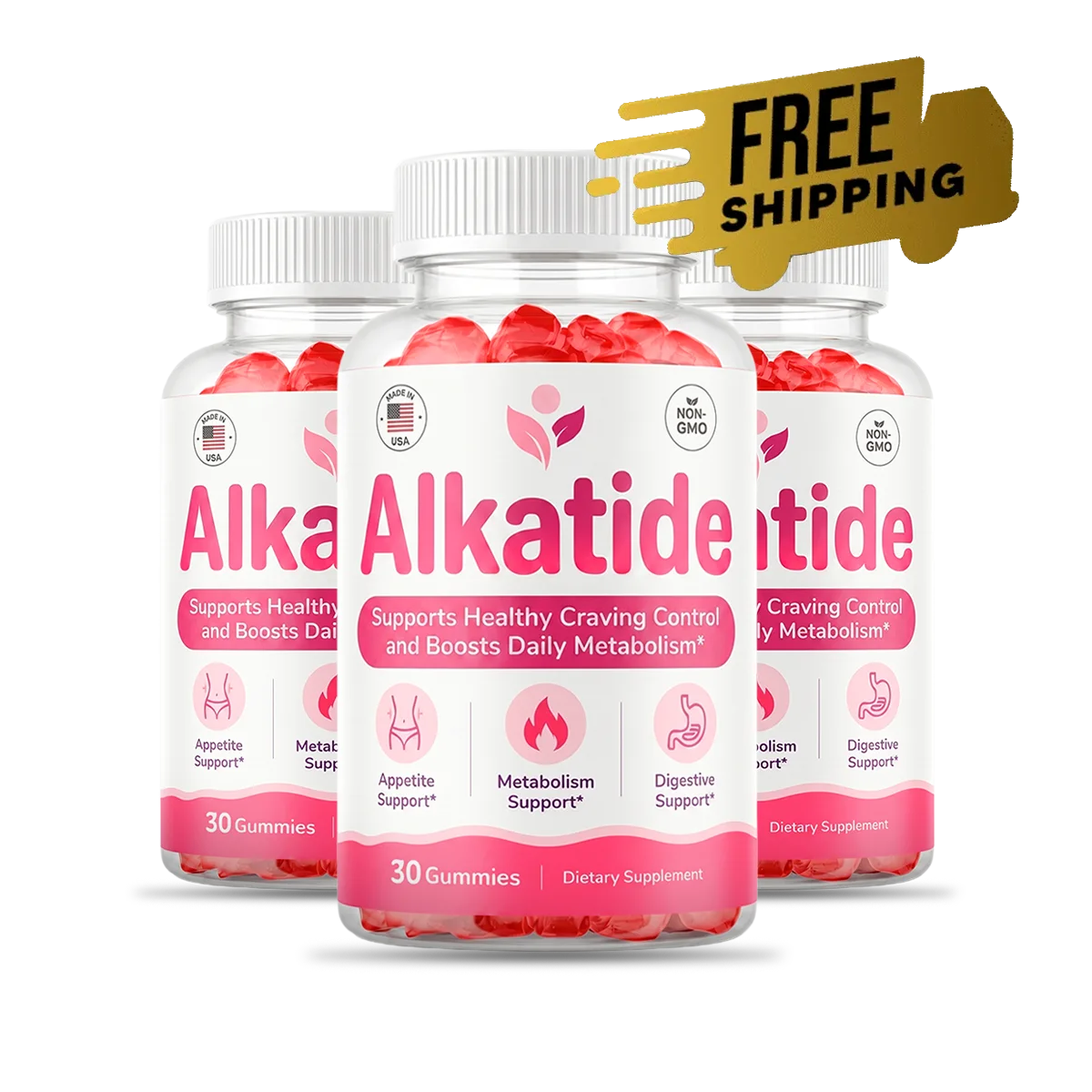
AlkaTide is not a GLP-1 drug and it is not a probiotic — it is an apple-cider-vinegar gummy whose acetic acid is itself a short-chain fatty acid, and whose pectin is a fermentable fibre. If that is the shelf you are shopping, the official store lists the current bundles, shipping and refund terms.
Check the Official AlkaTide StoreFoods and supplements that genuinely nudge natural GLP-1
Strip away the branding and a short, credible list remains. These are the levers with real mechanism behind them, in rough order of how reliable they are.
Soluble and fermentable fibre. This is the strongest natural lever most people never pull. Fibres like beta-glucan (oats), psyllium and pectin travel intact to the colon, where your bacteria ferment them into short-chain fatty acids — acetate, propionate and butyrate. Those molecules bind receptors on your L-cells and prompt more GLP-1 and its satiety partner PYY. Diet studies that report meaningful appetite effects use grams of fibre per day, which is worth remembering when a gummy promises the same from a fraction of a gram.
Protein at every meal. Protein is quietly one of the best GLP-1 triggers available, and it also blunts hunger through other pathways. Front-loading protein at breakfast is one of the highest-return habits for appetite control, and it costs nothing.
Acetic acid from vinegar. The acetic acid in vinegar is itself acetate, one of those short-chain fatty acids, which is exactly why vinegar keeps showing up in the appetite-and-glucose literature. The effect is small and meal-linked, not transformative, but it is real. We break down the mechanism in detail in our explainer on how acetic acid targets belly fat and post-meal glucose.
Berberine. The famous one deserves a fair hearing rather than either a crown or a dismissal. It is a plant alkaloid that activates an energy sensor called AMPK and has genuine effects on blood sugar, which is why it earned attention. Its weight effect is modest and it can upset the stomach, so dosing and timing matter a lot — we cover that in a dedicated berberine dosage for weight loss guide.
Fermented foods and diverse plants. Yogurt, kefir, kimchi and a wide variety of vegetables feed the fermenters you already have. This is the boring intervention that quietly out-performs most single-strain capsules, because diversity feeds many helpful bacteria at once. For the deeper story on this pathway, see our piece on how gut bacteria and short-chain fatty acids raise your own GLP-1.

Three myths about natural Ozempic alternatives
Myth 1: "It is basically Ozempic without the side effects." This is the belief that sells the most bottles, so it deserves confronting head-on. The scale is simply not comparable. A prescription GLP-1 agonist keeps the receptor activated continuously at a strength your own hormone never reaches; a fibre-and-vinegar approach produces a small, meal-linked bump in your natural GLP-1. Getting "no side effects" is partly a reflection of getting a far smaller effect. Anyone promising drug-level appetite suppression from a capsule is selling the headline, not the biology.
Myth 2: "Berberine is nature's Ozempic." It is the most repeated line in the category and the most misleading. Berberine is a legitimate supplement with real metabolic effects, but a roughly 1-3% weight change is not a substitute for a drug that reaches 15-21%. Treat berberine as what it is — a modest, evidence-backed tool with a real side-effect profile — and you will use it well. Treat it as a needle-free Ozempic and you will quit it disappointed in three weeks.
Myth 3: "A natural GLP-1 supplement can replace my medication." This is the one myth that can actually hurt you. If a clinician has prescribed a GLP-1 medicine, a supplement is not a swap, and stopping one on your own can be dangerous. Natural options sit alongside diet and lifestyle; they do not replace prescribed treatment. When in doubt, the answer is a conversation with your doctor, not a product page.

Where AlkaTide honestly fits in the natural Ozempic conversation
We should be direct about the product this site covers, because the honest version is more useful than the hype. AlkaTide is an apple-cider-vinegar gummy with three named ingredients: apple cider vinegar, citric acid and pectin. It is not a probiotic. It contains no Akkermansia, no Bacillus and no live culture of any kind, and it is not a berberine product either. No amount of "natural Ozempic" framing changes any of that, and we are not going to pretend otherwise.
What it does touch, honestly, are two threads from the story above. Pectin is a soluble fibre from apple and citrus peel — a genuine prebiotic that colonic bacteria turn into short-chain fatty acids. And the acetic acid in apple cider vinegar is itself acetate, one of those short-chain fatty acids, which is why vinegar shows up in the appetite-and-glucose literature at all. The caveat is the same one we apply to every product we cover: fibre trials that report meaningful effects use grams per day, a gummy delivers a fraction of a gram, and the manufacturer publishes no milligram figure. It is a small, food-level nudge in the direction the science points — a stimulant-free daily habit, not a natural Ozempic, and we will not call it one.
If that framing is what you were actually looking for — a gentle, once-daily appetite-support habit rather than a drug replacement — then AlkaTide is a reasonable fit, and you can read real buyer experiences in our honest AlkaTide reviews on whether it works before you decide.
Medical note: general information only, not medical advice. GLP-1 medications are prescription drugs — never start, stop, swap or delay one based on a supplement. If you have diabetes, take glucose-lowering medication, or are pregnant or nursing, speak to a qualified clinician before changing your diet or supplement routine.
Frequently asked questions
What is the closest natural alternative to Ozempic?
There is no true natural Ozempic. The honest closest thing is a high-protein, high-fibre diet with plenty of soluble fibre and a little vinegar, all of which nudge your own GLP-1 through short-chain fatty acids. The effect is modest, it only shows inside a calorie deficit, and no food or supplement reproduces a prescription drug. Think support, not substitute.
Can any supplement raise GLP-1 like Ozempic?
Not at drug strength. Ozempic keeps a GLP-1 receptor switched on for days; a supplement can only encourage a small, meal-linked rise in the GLP-1 your gut already makes. Fibre, resistant starch, protein and acetic acid all point in that direction, but the gap is measured in orders of magnitude. A supplement supports your own signalling; it does not flood the receptor the way an injection does.
Is berberine really nature's Ozempic?
No, and the nickname oversells it. Berberine is a plant alkaloid with real effects on blood sugar and AMPK signalling, but weight-loss trials typically show only about 1 to 3 percent body weight lost, versus roughly 14.9 percent for Wegovy and about 21 percent for Zepbound. Berberine is a legitimate supplement to research; it is not a natural Ozempic, and calling it one sets people up for disappointment.
Do gut bacteria affect GLP-1 and weight loss?
Yes, modestly. When your gut bacteria ferment fibre they produce short-chain fatty acids such as butyrate and acetate, and those molecules can prompt the L-cells in your gut lining to release more of your own GLP-1 and PYY. The effect is gentle and depends on eating enough fermentable fibre in the first place. A diverse, fibre-rich diet feeds many helpful strains at once, which matters more than any single named bacterium.
Related reading
Scientific references
- New England Journal of Medicine — Semaglutide (Wegovy) weight-management trial
- New England Journal of Medicine — Tirzepatide (Zepbound) SURMOUNT-1 trial
- NIH NIDDK — The digestive system and gut hormones
- Harvard T.H. Chan School of Public Health — Dietary fibre
- Mayo Clinic — Semaglutide (GLP-1 medication) overview
Support the natural pathway, honestly
No supplement is a natural Ozempic — but a fermentable fibre and an acetic-acid gummy sit in the same direction the science points. If AlkaTide is on your shortlist, the current bundles, shipping terms and money-back window are published on the official store page.
Go to the Official Store